Media Coverage
Jochen’s work has been featured over 200 times in media across the world.
















Selected Media Articles
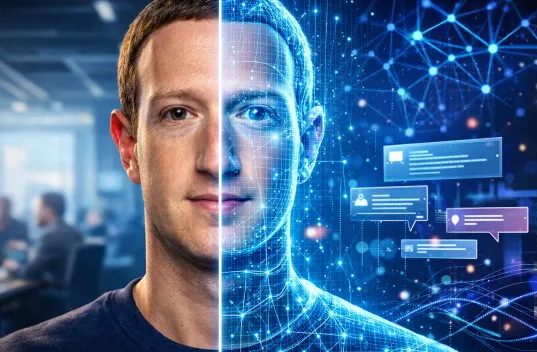
As Mark Zuckerberg makes an AI version of himself... will your next boss be an avatar?
The Standard · May 8, 2026A recent article explores Mark Zuckerberg’s vision of AI-generated “boss avatars” that could communicate directly with employees and potentially reshape leadership inside large organizations. While the idea may sound futuristic, Jochen Menges, Professor of Human Resource Management and Leadership at the University of Zurich, argues that it reflects a real organizational challenge: leaders often struggle to connect consistently with large and dispersed workforces. At the same time, Menges warns that leadership is not only about transmitting information, but also about building trust, emotional connection, and credibility - qualities that AI still cannot fully replicate. The article ultimately raises broader questions about whether the future of leadership will be defined by technological efficiency or by the uniquely human aspects of influence and relationships.
Read it
6 pieces of popular career advice that you should ignore
Business Insider · May 27, 2025Jochen Menges, Professor of Human Resource Management and Leadership at the University of Zurich, challenges the popular advice to “follow your passion,” calling it vague and ultimately unhelpful. Instead, he argues that people should focus on the emotions they want to experience at work, such as pride or fulfillment, and align their careers with those emotional needs. Doing so, he suggests, can lead to greater well-being and faster career development. Menges also highlights the growing importance of emotional judgment in an AI-driven workplace. As machines take over technical tasks, humans increasingly need to interpret, evaluate, and make sense of AI-generated outputs - processes that rely heavily on emotions. Overall, the article urges readers to question simplistic career slogans and consider adaptability, emotional clarity, and self-awareness as more sustainable guides to success.
Read it
Jobs you thought were AI-proof probably aren't
Business Insider · March 10, 2025Experts say artificial intelligence is expected to reshape the majority of jobs - not by replacing them entirely, but by changing how tasks are performed. Roles that combine hands-on work with technical skills - so-called “gray-collar” jobs - may see growing demand, while even professions once considered safe from automation are being touched by AI. The future workplace will increasingly involve collaboration between humans and AI, with machines handling parts of processes and people providing oversight, problem-solving, and contextual understanding. Jochen Menges emphasizes that even when AI produces results, human judgment remains essential - people must interpret outputs, refine prompts, and apply context. “Jobs that will have an emotional element attached to them will likely be the ones that will be higher valued in the future,” he says.
Read it
5 Ways To Boost Your Motivation At Work
Forbes · February 9, 2025The article explores practical ways employees can regain motivation at work at a time when workplace engagement is declining. Among the strategies discussed is drawing motivation from family, based on research co-authored by Jochen Menges. Rather than viewing work and family solely as competing demands, the research shows that supporting one’s family can provide employees with additional energy and purpose, particularly when the work itself is repetitive or not intrinsically rewarding. Alongside reducing distractions, setting achievable goals and changing one’s perspective, the article suggests that connecting work to meaningful personal reasons can help people remain engaged and perform at their best.
Read it
Those Who Have a Family Work More Efficiently
Tagesanzeiger · February 5, 2025Jochen Menges’ research shows that family and work do not have to compete; instead, they can reinforce one another. Family can be a powerful source of motivation, particularly in jobs with limited intrinsic satisfaction. People who work to support or set an example for loved ones often use their time more effectively and perform better - a dynamic that extends beyond parents to include partners, siblings, and extended family. Menges argues that whether family and work feel compatible begins with mindset: viewing them as mutually supportive reduces stress and increases fulfillment. He encourages employees to ask for flexibility and communicate openly about expectations. At the organizational level, he calls for family-friendly structures such as flexible hours, location autonomy, and childcare support, while cautioning that unchecked family-driven pressure can lead to burnout.
Read it
Generational Work Divides Don’t Have To Exist – Just Ask People Who Work With Their Grandparents
Huffpost · September 23, 2024Skip-generation work arrangements - where grandchildren and grandparents work together - offer rare opportunities for both personal and professional growth. Research on family motivation shows that employees driven by family responsibilities often perform better, motivated by the desire to support loved ones and set a positive example. This dynamic is illustrated by Emma Orfield Johnston, who collaborates with her grandfather at his design-research lab, balancing generational differences through mutual respect and creative tension. Such cases show how working across generations strengthens performance, deepens understanding of values, and preserves legacy. Beyond professional benefits, skip-generation work relationships foster pride, learning, and emotional connection, demonstrating how family motivation can meaningfully shape work outcomes.
Read it
Parents want to be admired by their children – and therefore make an effort at work
Neue Zürcher Zeitung · July 10, 2024An NZZ article challenges the belief that starting a family hinders career success, highlighting research from the University of Zurich showing that children can motivate parents to perform better at work. A 2017 study of low-wage workers in Northern Mexico found that employees motivated by supporting their families performed better. Parents often strive to be role models, valuing not only income but the meaning of their work. Jochen Menges, who co-authored the study, argues that children recognize the non-monetary value of their parents’ jobs. He suggests companies should acknowledge this motivation by involving families in workplace events. However, the article also notes structural challenges, especially for women, due to “greedy jobs” that reward long hours. While part-time work may not accelerate careers, it can still provide meaning through role modeling and family alignment.
Read it
Why it might pay for CEOs to 'show humanity' on analyst conference calls
Management Today · May 14, 2024Research from Cambridge Judge Business School, the University of Zurich, and the London School of Economics shows that CEOs’ expressions of human concern during earnings calls can positively influence share prices. Analyzing transcripts from 448 U.S. companies during the COVID-19 pandemic, the study found that even generic statements expressing care for employees or customers were associated with stronger stock performance and reduced volatility. About half of CEOs made such statements, most of which lacked concrete actions. Nonetheless, firms whose leaders communicated empathy performed better during and after the market crash. These findings suggest that care statements may signal stability and reduce uncertainty for investors. The results raise questions about why markets respond positively to symbolic expressions of concern and whether similar effects occur in other crises. As Jochen Menges notes, leadership requires balancing performance with visible care for people.
Read it
Building blocks for leadership in the age of New Work
Netzwoche · March 22, 2024The SwissICT Working Worlds Conference in Zurich focused on emotion, self-organization, and leadership in modern work environments. Jochen Menges, Director of the Center for Leadership in the Future of Work at the University of Zurich, emphasized emotions as a defining human trait that distinguishes people from machines. He argued that productivity follows happiness rather than the other way around, challenging traditional efficiency-driven thinking. Despite widespread investment in wellness programs, many fail to prevent burnout or meaningfully improve engagement. Menges called for a shift toward adaptive, emotionally intelligent organizations and introduced the concept of “Emotional Fit”—the alignment between desired and actual emotions at work. Poor emotional fit, he noted, is linked to stress and lower well-being. As AI takes over routine tasks, emotional intelligence will become increasingly central to leadership and organizational success.
Read it
Why social skills are crucial in the modern workplace
Bilanz · July 7, 2023The professional world demands not only technical skills but also social competencies. However, how can these be assessed? This article highlights insights from Prof. Dr. Jochen Menges’ extensive research: Social and emotional competencies are crucial beyond leadership. However there is a debate over evaluation methods. Prof. Dr. Jochen Menges recommends scientifically validated tests like GECO, which are affordable, fair, and standardized. Assessment centers are costly and time-consuming, limiting their use. Nonetheless, it's important for companies to take steps in this direction.
Read it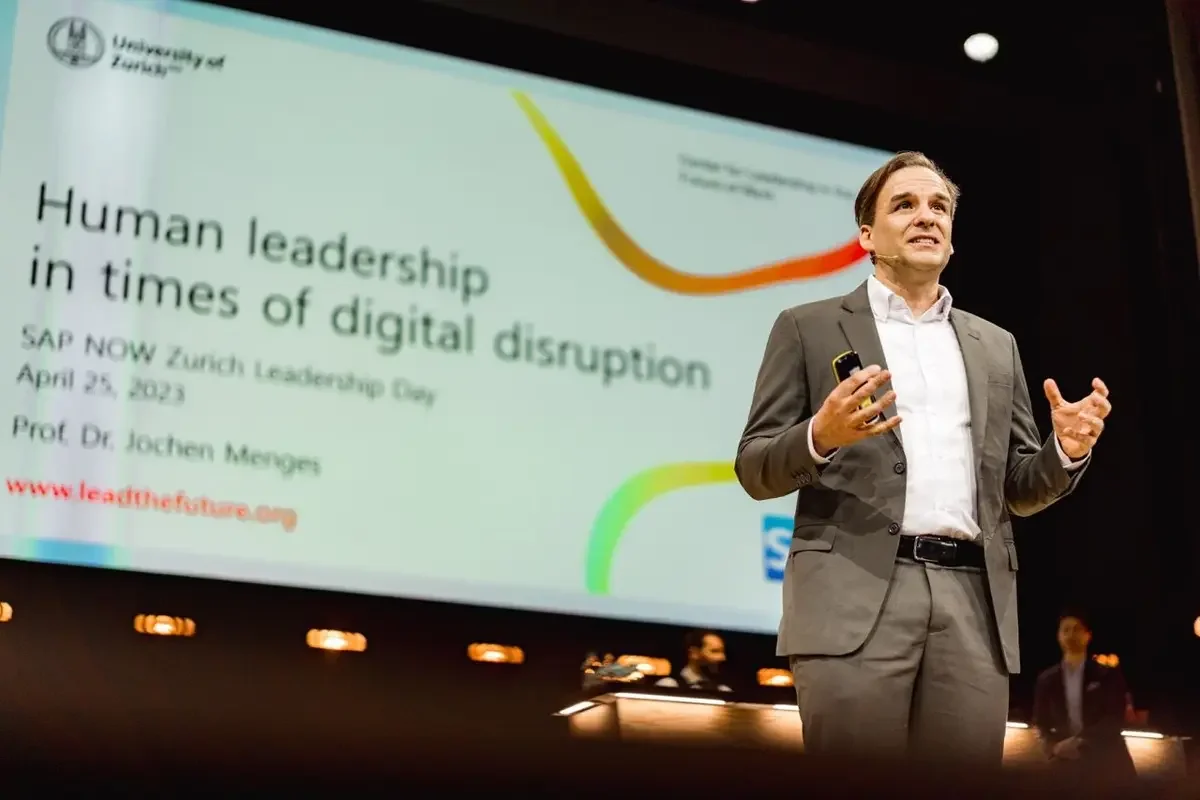
The future of corporate management - from rationalists and empiricists
Neue Zürcher Zeitung · May 4, 2023SAP emphasizes that the future belongs to companies that know how to make their ecosystem profitable, resilient and sustainable. The SAP NOW Zurich event, held on April 25th-26th 2023, convened ecosystems players to address global challenges. This article highlights insights from Prof. Dr. Jochen Menges’ inspirational keynote address at the SAP NOW Leadership Day. He emphasized emotional intelligence as the core differentiating leadership competency to navigate digital transformation. He also highlighted the need for leaders to nurture company cultures allowing for the expression of emotions and promoting the systematic use of emotional intelligence.
Read it
Heading Back to the Office? How to Love Your Commute
WSJ Podcasts · November 15, 2022How much do Americans hate commuting? Four-in-ten would rather clean their toilets than undergo the daily back-and-forth to the office, according to a survey by communications platform RingCentral. Now more workers are returning to the office, and time spent in cars, trains and buses is unavoidable. But Julia Lee Cunningham, professor of management and organizations at The University of Michigan’s Ross School of Business, says that we can use our commutes to make our workdays – and our lives – better, based on research conducted jointly with Prof. Dr. Jochen Menges.
Listen
Family bosses 'better than outsiders at inspiring enthusiasm'
The Times · November 10, 2022Research on 497 German companies shows that family CEOs are more likely than non-family executives to foster positive emotions such as enthusiasm and excitement among employees. Despite often being viewed as outdated, family-led firms were found to emotionally bind teams more effectively around shared goals. Jochen Menges, a co-author of the study, explains that family CEOs’ dual role as business leaders and family members allows them to convey genuine positive emotions that spread throughout the organization. Family CEOs’ ability to authentically express commitment and pride creates high-energy workplaces that support performance and cohesion.
Read it
Leveraging passion and purpose for quality employee retention
Forbes · October 13, 2022Amid the pandemic there has been a major cultural shift within the workforce resulting in an increase in the number of U.S. workers resigning from their jobs and even more who are pushing back, refusing to go above and beyond without an increase in salary. An article published earlier this year in the Harvard Business Review suggested that employers who support the passions of their personnel have a higher rate of retention. The article ranks the most underrecognized characteristic of highly sought-after jobs as the flexibility to pursue their passions.
Read it
Why admitting your flaws may earn your start-up more investment
The Times · September 15, 2022When pitching an idea to investors, entrepreneurs might want to try and hide their weaknesses. However, research by Prof. Dr. Jochen Menges and Prof. Dr. Lauren Howe shows that in some situations, showing flaws and insecurities can help entrepreneurs secure more money from investors.
Read it
Climbing the corporate ladder yields greater emotional benefits for men than women, study shows
Fortune · May 16, 2022Getting a promotion is usually associated with strong positive feelings such as pride, excitement and happiness. But a new survey co-authored by Prof. Dr. Jochen Menges show that women experience less emotional benefits from receiving a promotion compared to men. The research team asked about 15,000 survey participants to rate how often they feel certain emotions at work, and their place in the corporate hierarchy. Results show that gender makes a difference for how employees feel, in the sense that women feel more stressed and less respected at work, and that men’s positive emotions increase more strongly than women’s when they are moving up the rank.
Read it
4 strategies for improving the employee experience and bringing in profits, too
Forbes · May 1, 2022The key to retain talented employees is to focus on their needs. This article by Forbes highlights four strategies for leaders to meet employees' expectations. The article emphasizes the importance of giving employees more autonomy, citing research by Prof. Dr. Lauren Howe, Prof. Dr. Jochen Menges and Prof. Dr. Jon Jachimowicz, who put forth a call for organizations to expect—not just allow—employees to plan their schedules, causing a shift in attitude because workers begin to see that they’re supposed to follow their passions and balance their lives.
Read it
Get over here, old man!
Der Spiegel · April 30, 2022This German Spiegel article discusses generational inclusion. In doing so, it references a recent study by the CLFW showing that companies who focus both on people and results rather than just the latter fare better. During the beginning and throughout the COVID-19 crisis, stock prices of companies that acknowledged the human aspects suffered less of a plunge.
Read it
Women Feel Overwhelmed, Stressed, Frustrated at Work
Daily Mail · April 20, 2022Women are less likely to get promoted than men because they feel more stressed, frustrated and discouraged at work. This is because positive emotions are important for leadership, meaning women are at a disadvantage akin to running with 'leaded shoes', according to the sweeping new study on gender differences in emotion at work. 'It would be hard for anyone to break through a glass ceiling when they feel overwhelmed, stressed, less respected and less confident,' said co-author Jochen Menges, who teaches at both the University of Zurich and Cambridge Judge Business School. 'This emotional burden may not only hamper promotion opportunities for women, but also prevent them from contributing to an organisation to the best of their ability.' He added: 'More needs to be done to level the playing field when it comes to emotional burdens at work.'
Read it
The case for managerial decency
The Economist · April 2, 2022Prompted by P&O Ferries' notorious 2022 mass-sacking of 800 staff via video call, The Economist draws on new research co-authored by scholars at the University of Zurich, the London School of Economics, and Cambridge Judge Business School — including Jochen Menges, now Professor of Human Resource Management and Leadership at UZH — to make the case that how leaders handle hard decisions matters as much as the decisions themselves. Reviewing investor call transcripts from the early days of the pandemic, the study found that while nearly all CEOs addressed COVID-19's economic impact, only about half acknowledged its human toll. Strikingly, the share prices of the more compassionate-sounding executives outperformed their peers, both in the crisis's early stages and well beyond. The article argues that managerial decency isn't just a moral nicety — it's a signal that resonates with employees, investors, and the market alike, and one that Peter Hebblethwaite's brutal handling of the P&O layoffs conspicuously failed to send.
Read it
Embracing family motivation at work
Attuned · February 7, 2022In a study, Jochen Menges found that family motivation enhances job performance when intrinsic motivation is low — in part by providing energy, but not by reducing stress. This means that “you can do well in a job that is otherwise monotonous and boring, if you see the job as a conduit to something greater,” says Menges. And it’s not just about being a breadwinner: “a lot of [the workers] wanted to be a role model for their kids. They took pride in having a proper job and an honorable life”—like work is an extension of their caregiving. This also means that bosses could help motivate staff by letting them bring their family life into the workplace, he adds: letting employees display pictures of their kids; inviting family into work occasionally; or acknowledging family members when an employee is rewarded for her performance.
Read it
Horta-Osório case: When top managers put their careers at risk
Neue Zürcher Zeitung · January 19, 2022Time and again, high decision-makers make reckless decisions. Psychologists say this is due to the reduced risk awareness that comes with additional power. The good news is that there are counter-strategies. In this article, Prof. Dr. Jochen Menges contributes reflections on the impact power can have on empathy and the ability to recognize risks.
Read it
Struggling to retain top talent? Try corporate empathy
World Economic Forum · January 17, 2022With 41% employees considering changing jobs this year, the COVID-19 pandemic has further brought human beings and their emotional experience at work to the center of attention. In this opinion piece, Alain Dehaze proposes to use corporate empathy to retain top talents. Prof. Dr. Jochen Menges contributes thoughts on the importance of embedding emotional intelligence in organizational systems.
Read it
The Psychological Benefits of Commuting to Work
The Atlantic · July 1, 2021Many people who have been working from home are experiencing a void they can't quite name: while many people despise their commute to work, research has shown that it can increase satisfaction both for their work and home lives. Drawing on Research about "boundary theory," the piece explains that the commute helps workers psychologically transition between roles — deactivating "home mode" and activating "work mode," and vice versa. Without this buffer, one role can spill into the other, leaving people feeling perpetually on and never fully present in either. The takeaway: a good commute isn't dead time — it's a hidden tool for better-defined, less stressful days.
Read it
Why a fake commute could pave the way to work-from-home balance
The Washington Post · February 23, 2021Many people no longer need to commute to their workplace due to the increase in remote work. Going on a fake commute, such as biking in the morning before meetings, can simulate similar effects and benefit mental, physical and social health. Suggestions on how to implement a fake commute include: • find the ritual that’s right for you; • be strategic about timing - and strive for consistency; • leave home if you can; • consider including your family; • practice role-clarifying prospection; • get serious about disconnecting.
Read it
Be more productive: expert offers timely advice
Cambridge Network · January 26, 2021Remote work saves us a lot of commuting time, however most people report that they are not using this extra time wisely. Prof. Dr. Jochen Menges offers the following advice for using spare time more productively: • establish a work-home boundary and switch off work at the end of the day; • use leisure time more actively for example by volunteering or socializing rather than passive activities like watching TV; • identify a ‘must win’ everyday instead of having long task lists; • block some time slots so you can get important work done effectively without being interrupted.
Read it
Beyond the 9-to-5: What's the best plan for a radical new workday?
BBC · January 18, 2021Working remotely during most of the pandemic will have a lasting impact on the way we work. New work structures such as ‘hybrid’ work, a mix of office presence and remote, or four-day work weeks are gaining popularity. Instead of working 5 days in the office, Prof. Dr. Jochen Menges, Prof. Dr. Lauren Howe and Dr. Ashley Whillans propose 3 days in the office, two days remote and two days off (‘3-2-2’). This allows for more flexibility for employees and to increase work-life balance while still being able to have meetings in person. The article also discusses challenges associated with changes in work schedule.
Read it
The executive education courses teaching how to beat burnout
Financial Times · May 5, 2020"Burnout is so central to work in the 21st century that it must be in the standard curriculum of business schools and executive education programs." — Prof. Dr. Jochen Menges. This Financial Times piece explores how top business schools are folding burnout science into executive education, as fading stigma and mounting health costs drive demand. From Columbia's cortisol testing to Stanford's mindfulness training, the article shows leaders learning to manage stress not as a personal failing but as a serious organizational risk — one linked to $190 billion in annual US healthcare costs and rising employee turnover.
Read it